
Having a fast and reliable internet connection at home is essential. But choosing the right WiFi system can be confusing. Two popular options are Mesh WiFi systems and traditional routers. In this blog, we will explain the differences in simple terms and help you decide what works best for your home.
What is a Traditional Router?
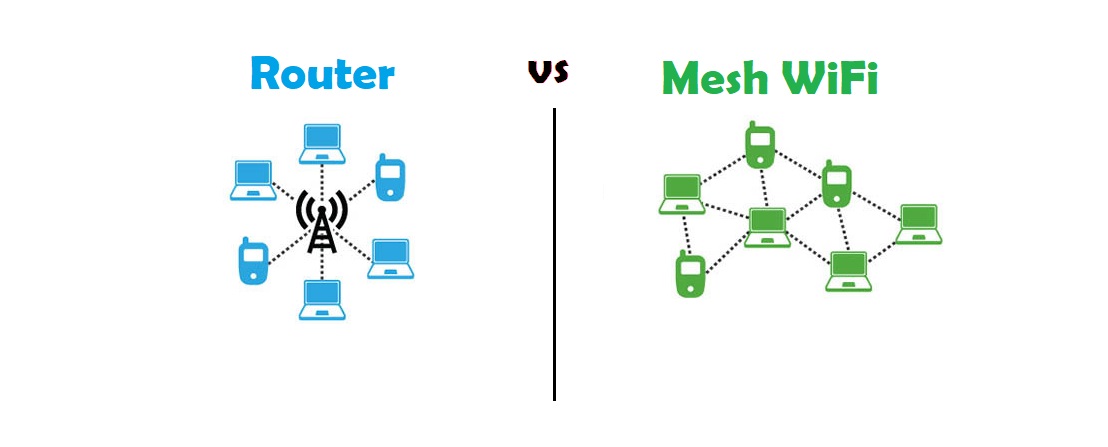
A traditional router is a single device that connects to your internet service and distributes WiFi throughout your home.
Key Points:
- Usually a single unit
- Works best in small to medium-sized homes
- Can lose signal strength in larger houses or multiple floors
- Affordable and easy to set up
Pros of Traditional Routers:
- Low cost
- Easy installation
- Suitable for small homes
Cons:
- Limited coverage
- Signal may weaken in corners or upstairs
- Adding range requires extra devices like extenders
What is Mesh WiFi?
Mesh WiFi is a system made up of multiple devices called nodes that work together to provide WiFi coverage across your entire home.
Key Points:
- One main router connects to the internet, others act as nodes
- Excellent coverage in large homes or homes with thick walls
- Nodes communicate with each other for seamless WiFi
Pros of Mesh WiFi:
- Strong, reliable WiFi in every corner
- Easy to expand by adding more nodes
- Smart routing ensures devices connect to the best signal
Cons:
- Higher cost than a traditional router
- Slightly more complex setup
- Some models may require subscriptions for advanced features
Mesh WiFi vs Traditional Routers: Side-by-Side Comparison
| Feature | Traditional Router | Mesh WiFi |
|---|---|---|
| Coverage | Limited | Whole-home coverage |
| Speed | May drop far from router | Consistent across nodes |
| Setup | Simple | Moderate complexity |
| Cost | Low | Medium to High |
| Scalability | Needs extenders | Easy to add more nodes |
For small homes or apartments, a traditional router works fine. For large homes or multiple floors, Mesh WiFi is often the better choice.
How to Decide Which Is Right for You
Consider the following questions:
- Home Size: Do you have a small apartment or a multi-floor house?
- WiFi Usage: Do you stream movies, play online games, or have multiple devices?
- Budget: Are you looking for a low-cost solution or willing to invest in premium coverage?
- Future Expansion: Do you plan to expand your WiFi network later?
For seamless coverage and fewer dead zones, Mesh WiFi is worth the investment. For basic internet use in small homes, a traditional router is sufficient.
FAQs About Mesh WiFi and Traditional Routers
Q1: Can I replace my traditional router with Mesh WiFi?
Yes. Mesh WiFi can completely replace your old router and provide better coverage, especially in large homes.
Q2: Are Mesh WiFi systems expensive to maintain?
Not really. Once installed, they require minimal maintenance. Some advanced features may need subscription plans.
Q3: Can I mix a traditional router with Mesh WiFi?
Yes, but for the best experience, it is recommended to use a full Mesh system rather than mixing devices.
Q4: How do I know which Mesh system is right for my home?
Consider the size of your home, number of devices, and budget. You can also contact a network installation expert for advice.
Q5: Do Mesh WiFi nodes need power outlets?
Yes, each node needs a power source and should be placed strategically for optimal coverage.
Conclusion
Choosing the right WiFi system depends on your home size, internet needs, and budget.
- Small homes or apartments: Traditional router is sufficient
- Large homes or multiple floors: Mesh WiFi is the better choice
If you need help setting up a reliable home network, our professional network installation and consultation services can ensure fast, stable WiFi in every corner of your home.
Call to Action
Ready to upgrade your home WiFi? Contact us today for expert home network installation, troubleshooting, and cable management services.